


A nanoscale shield for more durable perovskite solar cells
|Perovskite solar cells have revolutionised the photovoltaics world. Yet, one major obstacle still stands between perovskites and widespread commercial use: long-term stability, because this material tends to degrade when exposed to heat, moisture, light, and even their own neighboring layers inside the solar cell.
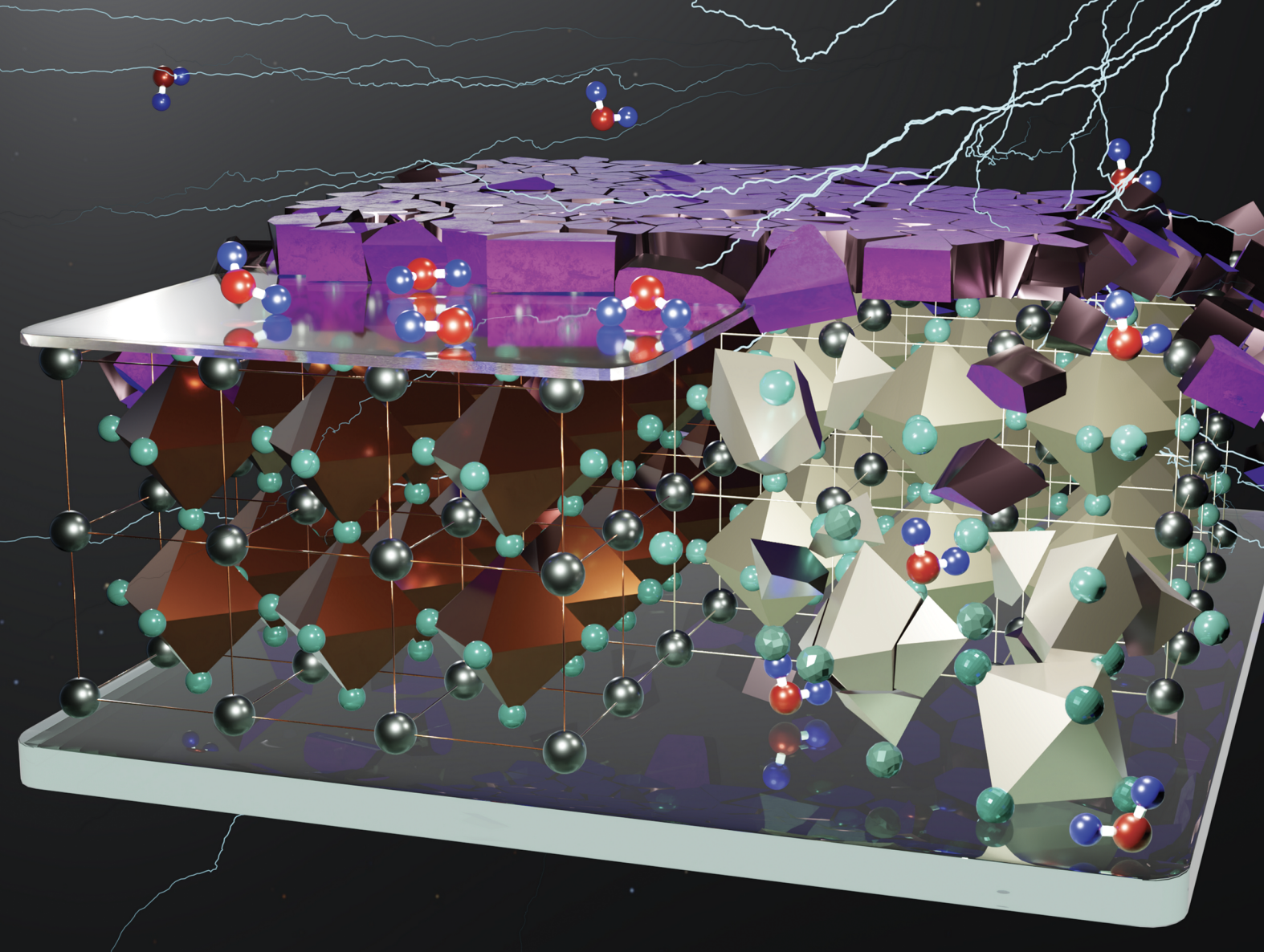
Das Chittaranjan, Kedia Mayank, Saliba Michael (University of Stuttgart) and colleagues tackled this problem by focusing on one of the most vulnerable parts of a perovskite solar cell: the interfaces between layers, in which unwanted chemical species can migrate, accelerating degradation over time. Researchers borrowed a technique, atomic layer deposition (ALD), from microelectronics: ALD allows materials to be deposited one atomic layer at a time, producing extremely thin and uniform coatings. The team deposited an ultrathin layer of aluminum oxide (alumina) onto a state-of-the-art perovskite absorber at room temperature, thus avoiding to damage the sensitive perovskite underneath.
Then, using high-resolution techniques, including Near Ambient Pressure X-ray Photoelectron Spectroscopy available at the CERIC Czech Partner facility, scientists confirmed that the alumina layer forms a continuous, conformal “nanoscale shield” over the perovskite surface. Despite being so thin, this layer had a big impact: solar cell efficiency increased and, more importantly, stability improved dramatically. Unencapsulated cells with the alumina layer retained about 75% of their initial performance after six months, while unprotected cells dropped to just 10%. Moreover, in outdoor-like testing over 1.500 hours, the protected devices maintained almost all their efficiency.
These results show that alumina layers block moisture from entering the perovskite, and also that they prevent harmful compounds from the adjacent charge-transport layer to diffuse into it. The ultrathin coating preserves the perovskite’s crystal structure and slows degradation, bringing perovskite solar cells one step closer to real-world deployment.
ORIGINAL ARTICLE: