



CERIC PhDs – Concluded
CERIC supported the research of several PhD students (thanks to both direct support and participation in in-house projects), whose experiments and results were published as part of their dissertations.
CERIC PhDs – Theses
Below is a list of the theses published by CERIC PhDs.
- Zingaro F., Advanced approaches to investigate immune and reproductive toxicity of nanoplastics, 2024
- Morasso S., Integrative approach in drug discovery against SARS-CoV2: a biochemical and biophysical study on the Papain-like protease, 2024, link
- Moradmand S., Towards fabrication of 2D out-of-plane functional supramolecular nanoarchitectures, 2023
- Wechsler D., Porphyrin adsorption and reactivity on oxide surfaces, 2021, link
- Kosto Y., Study of cerium oxide thin films for biosensing applications, 2021, link
- Bercha S., Model systems with the use of CeO2 for bioapplication, 2020, link
- Bogar M., Operando SAXS investigation for Polymer Electrolyte Fuel Cells, 2020
- Wituschek A., Phase-modulated coherent time-domain spectroscopy in the extreme ultraviolet regime, 2020, link
- Zalduendo M.M., Composite materials based on mesoporous thin films and metallic nanoparticles: synthesis, characterisation and design of optical sensors, 2020
- Bottari C., Solvation effects of ionic liquid/water mixtures on biomolecules, 2020, link
- De Angelis D., Graphene-based interfaces as tuneable support for metal oxide nanoparticles, 2019, link
- Lionello D., Study of mechanical and tribological properties of nanostructured materials, 2018
- Kettner M., Reactivity of transition metals – influence of the degree of oxidation of active substrate, 2017, link
- Beranova K., Study of dependence of the metal-oxide electron structure on the reactivity of these systems, 2015, link
CERIC PhDs – Concluded
Below is a list of the researchers who received support from CERIC to complete their PhD.
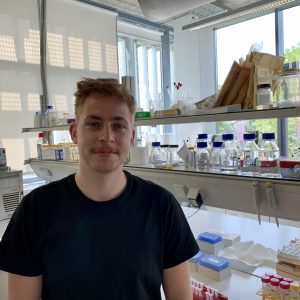
Bio:
Simon Aleksič was born on April 19, 1995, in Slovenia. He received his B.Sc. and M.Sc. degrees in Biochemistry in 2017 and 2020, respectively, at the Faculty of Chemistry and Chemical Technology, University of Ljubljana. Since 2020, he is employed at the Slovenian NMR Centre as a Ph.D. student, supported by the CERIC-ERIC consortium, with a research focus on the effect of oxidative stress on guanine-rich genomic regions using high-resolution NMR spectroscopy.
Title of research:
Effect of oxidative stress on guanine rich genomic regions.
Abstract:
Guanine-rich nucleic acids can adopt noncanonical structures, called G-quadruplexes. Potential G-quadruplex forming sequences are predominantly found in the promoters and telomeric regions of genomes and studies show that their formation can affect important cellular mechanisms, such as gene expression and telomere length regulation. During periods of oxidative stress in the cell, reactive oxygen species can chemically damage biomacromolecules. Among the four common nucleobases, guanine is the most susceptible to oxidation. G-quadruplex forming sequences are therefore potential sites of intensified guanine oxidation. Oxidated lesions feature altered hydrogen bonding abilities, which can impact the folding, structure and stability of nucleic acids. Using high-resolution NMR methods and complementary techniques, we will determine how oxidation of guanine impacts the structure of guanine-rich nucleic acids, originating from functionally important genomic regions.
Bio:
CarloAlberto is a PhD student in chemistry working at Elettra Sincrotrone Trieste. His background covers both chemistry and materials science. During his Bachelor’s degree, he synthesized and studied up-converting luminescent nanoparticles. Moving to the Master’s program he decided to grow and study magnetic ultrathin-films at the Nanospectroscopy beamline, where he is pursuing his PhD degree at the moment. He is part of an Italian- Swedish group working on ultrafast dynamics in condensed matter focusing on magnetism. Besides being in the lab he likes to do handy activities like cultivation, gardening, beekeeping.
Title of research:
Interlayer magnetic coupling mediated by Dirac materials.
Abstract:
Targets of this research are understanding and control of the macroscopic magnetic response of ferromagnetic materials when they interact with two-dimensional materials such as graphene or others Dirac materials. The main goal is to build up a synthetic antiferromagnet composed of a stack of ferromagnetic layers separated by a two- dimensional non-magnetic spacer, hence observing how the non-magnetic spacer modifies the magnetic response of the system. The research activity is performed at the Nanospectroscopy beamline at Elettra Sincrotrone Trieste, giving the possibility to prepare samples in situ and to obtain structural, chemical and magnetic information in a laterally-resolved manner.

Bio:
Lorenzo D’Amico was born in Trieste in 1994. After graduation in 2014 in Material Engineering at the University of Trieste, he decided to enrol in the master program of Biomedical Engineering. During his master he had the opportunity to join the Erasmus program and spend 6 months abroad at the Eindhoven University of Technology, where he wrote his master thesis. Thanks to this experience he developed a huge interest in research and decided to apply for the PhD program after my graduation in 2019. In August 2020 he started an internship at SYRMEP beamline (Elettra Synchrotron), where he is currently working, during which I had my first meeting with the world of research. In November 2020 I started my PhD. So far, I am very fulfilled with my choice and I look forward to attempting new challenges.
Project title:
Imaging and characterization of fibrotic tissues.
Abstract:
Fibrosis is a general term for diseases that lead to an increased deposition of fibers, which in turn changes mechanical properties such as stiffness of an organ. This may affect the function of the organ like in the case of lung fibrosis the lung function. So far fibrosis has been studied very organ specific, but the underlying processes are most likely more general. It is important to underline that If the remodeling of the organ is still ongoing typically by an inflammatory process it can be suppressed with treatment. Therefore, early diagnosis of a fibrotic process and a treatment that reduces or cancels its development is of great interest. Unfortunately, little is known about the type of fibers deposited, their orientation and the underlying pathomechanism.
Therefore, the aim of this PhD thesis is to develop a multi-parametric analysis exploiting several techniques such as phase contrast microCT, histology, NIR-spectroscopy, AFM and SAXS that allows a comprehensive characterization of fibrosis.
To establish this pipeline tissue of commonly used mouse fibrosis models such as the Bleomycin lung fibrosis model will be used. Later on we plan to study patient tissue biopsies with the same pipeline. The resulting data should then be clustered using unsupervised machine learning strategies to identify potential subgroups of fibrosis.
This thesis is committed to answer the following questions:
Does the proposed combination of analytic techniques allow for the identification of fibrosis in general?
Do subtypes of fibrosis exist?
Which are the main parameters driving the decision? (Can the complexity of the analysis be reduced?)
Which subtype of fibrosis resembles the fibrosis in the typically applied animal models?
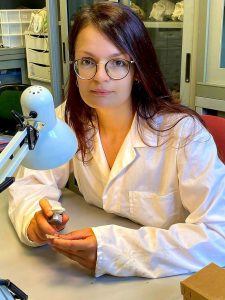
Bio:
Clarissa Dominici is a naturalist with an education on prehistoric ecology, palaeontology and human evolution. As a zooarchaeologist, she studied faunal assemblages coming from the Upper Palaeolithic sequences of Grotta Paglicci (Apulia, Italy) and Grotta della Cala (Campania). She is part of the RU of Prehistory and Anthropology of the University of Siena with a role of responsibility for the Middle Palaeolithic excavation fieldwork at Grotta dei Santi (Tuscany) and Riparo L’Oscurusciuto (Apulia).
Project title:
Hunting technologies during the Middle and Upper Palaeolithic in Central-Southern Italy – Chemical and morphological analyses on lithic and bone implements.
Abstract:
Her PhD project is aimed at the reconstruction of hunting strategies of Neandertals and Modern Humans in southern Italy, through the chemical characterisation of archaeological residues coming from lithic and bone implements thought to have been used as projectiles, in addition to impact fractures analysis. The integration of multiple cutting-edge techniques will allow the discrimination between different substances on artefacts, e.g. organic traces of animal and/or vegetal origin, mixtures of different compounds used for hafting or toxic essences used as poison. To allow a comparison between human adaptation in different environmental conditions, materials from four archaeological sites are being studied: Grotta della Cala and Grotta di Castelcivita in Campania and Grotta Paglicci and Riparo L’Oscurusciuto in Apulia. The project is a joint initiative of the Department of Physical Science, Earth and Environment of the University of Siena and the Chemical and Life Sciences branch of the SISSI beamline at Elettra Sincrotrone, and is performed in collaboration with TwinMic@Elettra, SYRMEP@Elettra and LIBI@RBI.
Bio:
Matej Gabrijelčič is a Researcher PhD Student in Physics who works in the field of solid state NMR and modern battery systems at the National Institute of Chemistry in Ljubljana (Slovenia). Matej holds a Bachelor’s Degree in Physics and a Master’s Degree in Physics Education from the University of Ljubljana. Matej has 4 years of experience in the automotive industry, especially R&D and laboratory for testing and validation. He is motivated in constant improvement in natural sciences, combined with learning about soft skills. He is a certified NLP Master Coach from International NLP Trainers Association. In his free time, Matej likes to practice ju-jitsu and improvisation theatre.
Project title:
Unravelling the electrochemical mechanisms of battery degradation by operando NMR and X ray absorption spectroscopy.
Abstract:
The goal of the proposed PhD study is the implementation of operando NMR spectroscopy of batteries and related materials at SloNMR@NIC. The PhD student will install, modify and test the necessary equipment and then use it to study the degradation of batteries. The operando NMR measurements will be combined by the operando XAS (performed at Elettra) and XRD measurements (performed at NIC or Elettra). The aim of the measurements will be to clarify the degradation mechanisms in the bulk (XAS, XRD and NMR) and at the interfaces (NMR). Such a combined study will provide the necessary data for the evaluation of battery quality and expected lifetime.

Bio:
Antonio Longo (15/07/1995 – Battipaglia (SA)) defines himself as a person in love with the mechanisms at the basis of music and life. Giving priority to only one of the two, he studied biological sciences at the University of Salerno and functional genomics at the University of Trieste, where he achieved the master degree cum laude in 2019, presenting a master thesis entitled “Structural characterization of the C-terminal region of the RTEL1 helicase”. In 2020 he obtained a joint fellowship ICGEB – Elettra, joining the Structural Biology laboratory at Elettra (led by prof. Silvia Onesti) and the Molecular Pathology laboratory at ICGEB (led by prof. Emanuele Buratti), investigating the biochemical properties of the human RECQ4 helicase.The same year (2020) he started his INTEGRA-CERIC PhD program in Chemistry (University of Trieste), in the Structural Biology Laboratory at Elettra Sincrotrone Trieste.
Project title:
Structural and functional analysis of helicases involved in genome maintenance.
Abstract:
Helicases are molecular motors able to unwind nucleic acids structures by using energy from ATP hydrolysis. Among the Superfamily 2 helicases, the RecQ family and the FeS family, conserved from bacteria to higher eukaryotes, are characterized by a wider range of nucleic acid substrates, including D-loops, R-loops, G-quadruplexes, triple helices, Holliday junctions, etc. RecQ helicases are essential in preserving the genomic stability of cells, by performing a broad variety of functions at the interface of DNA replication, recombination and repair. In humans, there are five RecQ helicases, of which three of them cause rare genetic syndromes when mutated. The FeS helicases are characterized by the presence of a domain that binds an iron-sulfur (FeS) cluster which seems to be involved in nucleic acid unwinding. Defects in every of the FeS helicases cause genetic syndromes and cancer predisposition. Some structural information is available for human RecQ helicases and none for Fe-S helicases. Their involvement in many severe diseases highlights the relevance of additional biochemical and structural information, to better understand their function in the cell, the role of the “non-helicase” domains (often essential for viability) and to elucidate their interactome, which are tightly regulated in concert with the cell-cycle. In this context, the aim of this PhD project is to characterize structurally and functionally key helicases for genome maintenance. For each target helicase the project will focus around 3 major activities: 1) the production of the recombinant protein and its mutants; 2) the biochemical characterization of these proteins; 3) the use of all these proteins for structural investigations using X-ray crystallography, small-angle X-ray scattering and cryo-electron microscopy.
Project title: Recovery and characterization of layered oxides materials from spent batteries: a step forward towards sustainability.
Project title:
Integrated structural analysis of human USPs: a novel family of drug gable targets.

Bio:
She studied Biomedical Engineering for her B.Sc. and undertook an M.Sc. in Bionanotechnology, both at the Polytechnic of Turin, and now she is a 1st year Ph.D. student in the Nanotechnology program at the University of Trieste. In her master thesis project, which was part of an exchange period as a visiting student at the Uppsala University, she worked on the characterization at the single-particle level of small extracellular vesicles, by using Atomic-Force Microscopy and Fluorescence Microscopy, for cancer diagnosis. This experience showed her the different ways in which fundamental and applied research may interact and enriched her passion on how the physical and biological worlds can works in synergy for the development of important biomedical applications. To follow that line, she is currently working on a multidisciplinary Ph.D. project that aims to understand the role played by small extracellular vesicles in cell-cell communication mechanisms, with an eye to cancer applications.
Project title:
Mechanisms of Extracellular Vesicles (EVs)internalization by cells.
Abstract:
Small extracellular vesicles (sEVs) are nanometer-sized vesicles (30-200 nm) that are released from almost all types of cells both in pathological and physiological conditions. These biological nanoparticles have shown potential for cancer diagnostics/therapeutics as by travelling in body fluids (e.g., blood, saliva) they carry “biological information” between near and far cells. However, the complexity of EVs origin, their composition, and nanometric size, make them a challenge to be analysed by many available bioanalytical techniques. Indeed, EVs are heterogenous nano-carriers with complex cargoes (proteins, lipids, and nucleic acids, etc.), whose population mostly changes in accordance with the type of parental cells and the specific physiological or pathological conditions at the moment of their packaging and secretion. Cell type specificity of EVs biogenesis, release, and uptake is still debated, as well as the involved targeting cell receptors and internalization pathways (e.g., cell membrane fusion and endocytosis).
Herein, we propose a nano/microscopic-based approach to investigate structure-function correlations of EVs from two different breast cancer cell lines with different aggressiveness, with lipid model membrane systems of increasing complexity. As a starting point, AFM imaging was and will be performed by using lipid bilayers of variably composition, in different environmental conditions. Preliminary vesicle-membrane interaction analyses were carried out with sEVs isolated from human umbilical cord-derived mesenchymal stromal cells (hUC-MSCs) as a reference sample. Results obtained revealed various interaction mechanisms of EVs with lipid model membranes depending on the salt concentration and preferentially with liquid-ordered raft-like lipid domains. These findings allow a better understanding of the EV uptake mechanisms by recipient cells and the most relevant parameters involved in the EV selective targeting in tumor microenvironments.
Bio:
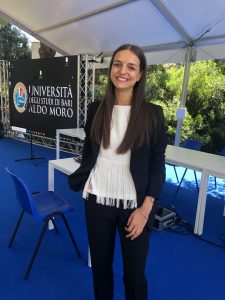
Federica Zingaro graduated in Pharmacy (2015-2020) at University of Bari Aldo Moro, Italy, with a thesis on “Self-assembled amphiphilic cyclodextrins as anticancer drug carriers for the treatment of brain tumors”, supported by the Global Thesis project between the Pharmaceutical Technology research group of Bari and the Laboratoire de Glycochimie in Amiens, France. In November 2020, she joined the PhD program in Nanotechnology at University of Trieste, to acquire advanced analytical skills to be applied in the biological fields.
Project title:
Effects of particulate and endocrine-disrupting metals on fertility
Abstract:
Long-term exposition of the reproductive system to environmental pollutants is raising major concerns in the scientific research field, due to their consequent adverse effects on human fertility. The present work focuses on unravelling the impact of environmental pollutants (endocrine-disrupting metals, nano sized particulate and microplastics) on human fertility.
The research comes from an ongoing collaboration between Elettra Sincrotrone Trieste (TwinMic beamline) and IRCSS Burlo Hospital, principally the Obstetrics and Gynaecology Unit which will provide clinical samples (tissues, gametes, and biological fluids). In parallel to clinical samples, in vitro models will be set up to reproduce reproductive districts and barriers: in these we will investigate the accumulation mechanisms and toxicological effects, following morphological and chemical changes.
During the 1st year of the PhD, in collaboration with the JRC (Joint Research Centre, Ispra), we started investigating the reproductive toxicity of Quantum Dots labelled MPs models. The samples will be studied by using a combination of techniques offered by the CERIC-ERIC facilities and other European laboratories.

Bio:
Martina Zangari was born in Varese in 1994. In 2017 she obtained the Bachelor’s degree in Life Science and in 2019 she graduated in Molecular and Industrial Biotechnology. Currently, she attends the 1st year PhD course at University of Trieste with CERIC-ERIC scholarship. She works in Electrophysiology and Biophysics Lab in Department of Life science at UniTS and in Sissi-Beamline at Elettra Synchrotron.
Project title:
Analysis of the changes induced by asbestos fibers on the structure of absorbed proteins and lung tissue architecture
Abstract:
In the past century asbestos, a natural mineral, was used because of its resistance and low cost (1). Respiratory exposure to asbestos fibers is a hazard to human health, because their inhalation causes cell proliferation and cells oxidative stress. A key process in pathology development is the interaction of fiber with proteins: it can trigger the entry in the cytosol, can induce cytoskeleton modification and apoptosis. Many proteins are able to bind to the asbestos fibers forming asbestos body (AB) (2). The goal of this project is to unravel the mechanism of protein binding to asbestos fibers and their consequent structural and functional modifications. First, biochemical profile modifications will be evaluated with a portfolio of techniques that exploits synchrotron radiation IR and X-ray sources (micro and nano FTIR, XRF and X-Ray Microscopies), as well as electron and protons beams (HR- TEM). Then, electrophysiology will be used exploiting the two-electrode voltage clamp on Xenopus oocytes and human cells treated with asbestos fiber to highlight the role of fibers composition on protein misfolding and toxicity.
References:
(1) Nagai H., Ishihara T., Lee WH., Ohara H., Okazaki Y., Okawa K., Toyokuni S. (2011). Asbestos surface provides a niche foroxidative modification. Cancer Science.102(12): 2118-25. DOI
(2) Bardelli F., Giulia Veronesi G., Capella S., Bellis D., Charlet L., Cedola A. & Elena Belluso E. (2016). New insights on the biomineralisation process developing in human lungs around inhaled asbestos fibres. Scientific Reports. 7:44862 DOI
-
04.03.2026
CERIC PhDs - Ongoing
-
04.06.2025
INCITE