


CERIC meets the public at Trieste Next 2026
|What does it mean to be a researcher today? What happens behind the scenes of an international research project? And how can a European research infrastructure help scientists turn ideas into discoveries? These were some of the questions explored by CERIC at this year’s Trieste Next, the scientific outreach festival that brought science and the public together in Trieste from 25 to 27 September.
CERIC’s programme offered visitors several different ways to engage with research: from meeting scientists and hearing about their careers to taking part in an interactive game inspired by the everyday challenges of scientific work. The result was a lively exchange with an audience that went well beyond the scientific community.
Meeting the people behind the research
During CERIC on AIR, a series of three informal interviews held on Saturday 26 September at the AREA Science Park exhibition space in Piazza Unità, visitors had the opportunity to meet three researchers from the CERIC Partner Facility based at Elettra: Eleonora Afanasenko, from the Austrian Partner Facility, Diego Dreossi, from the Italian Partner Facility, and Nataliya Tsud, from the Czech Partner Facility.
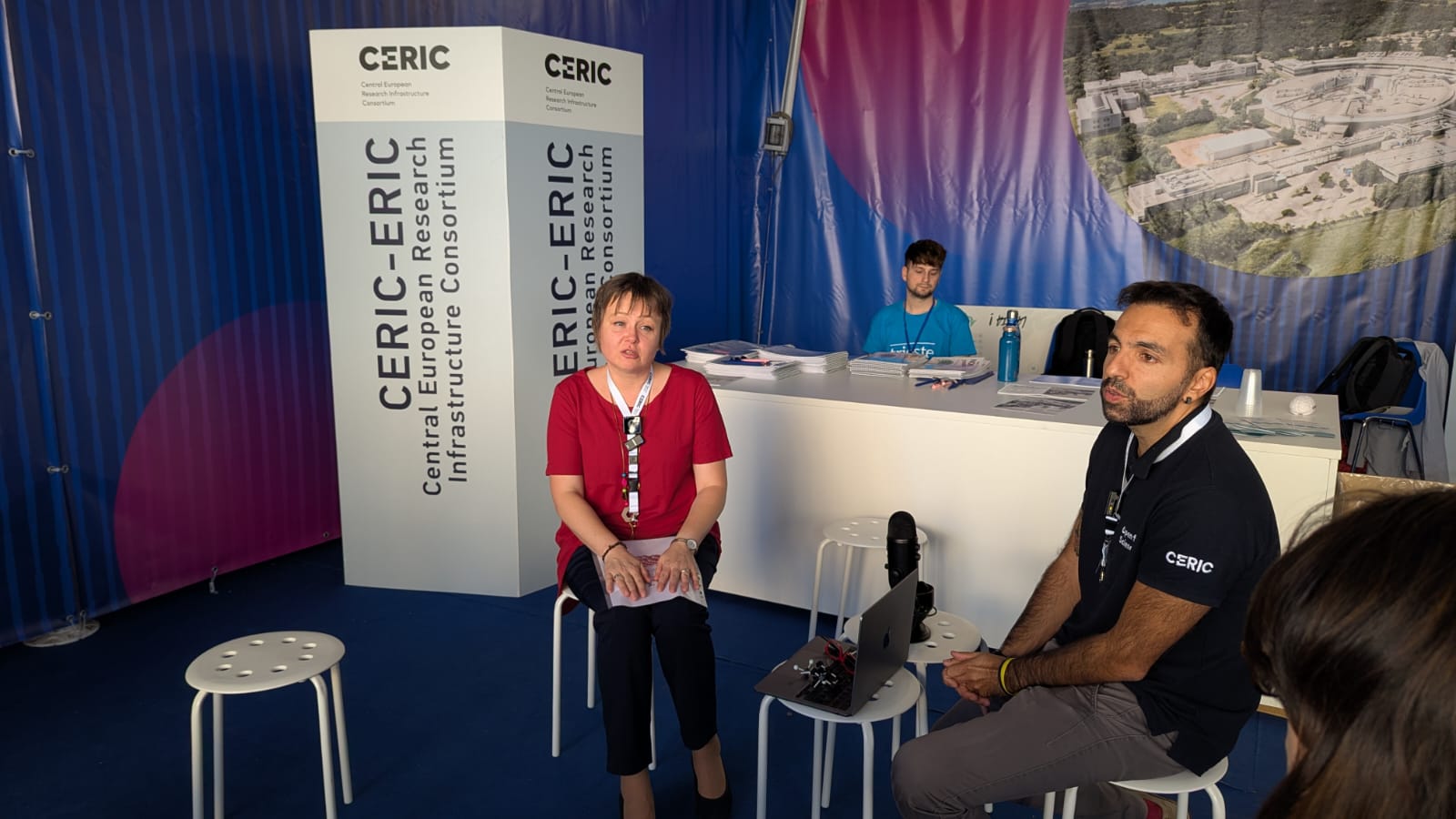
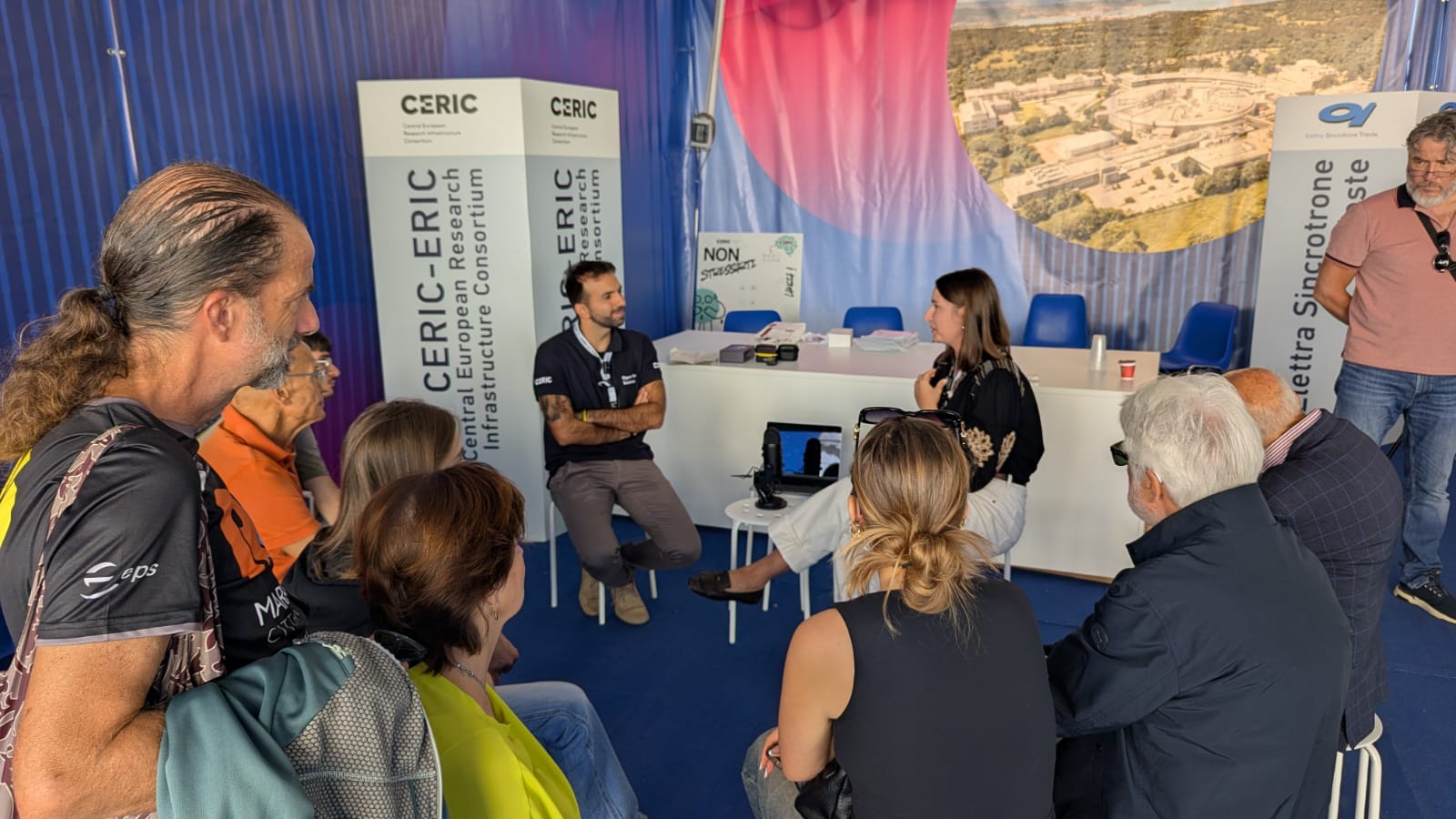
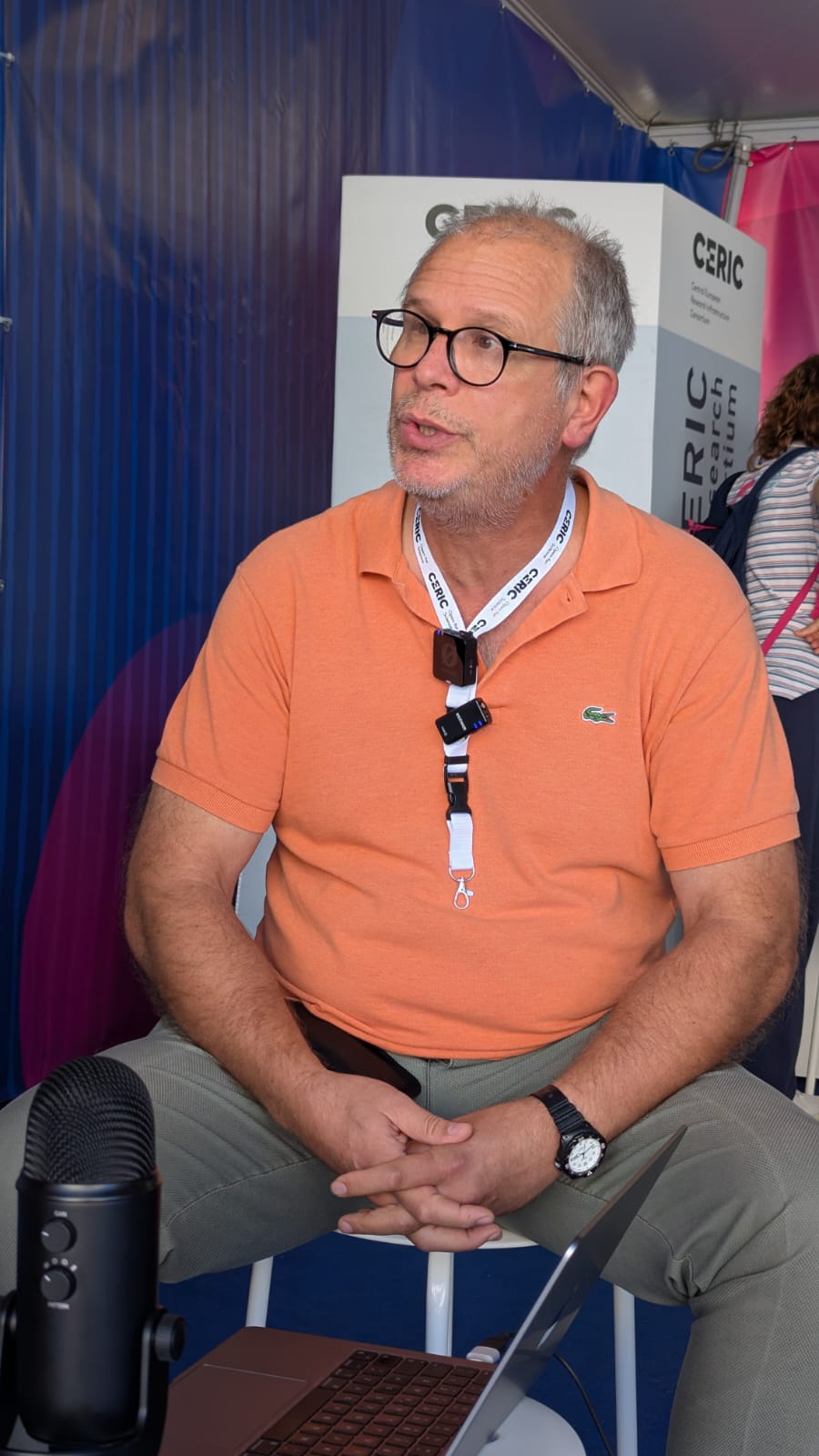
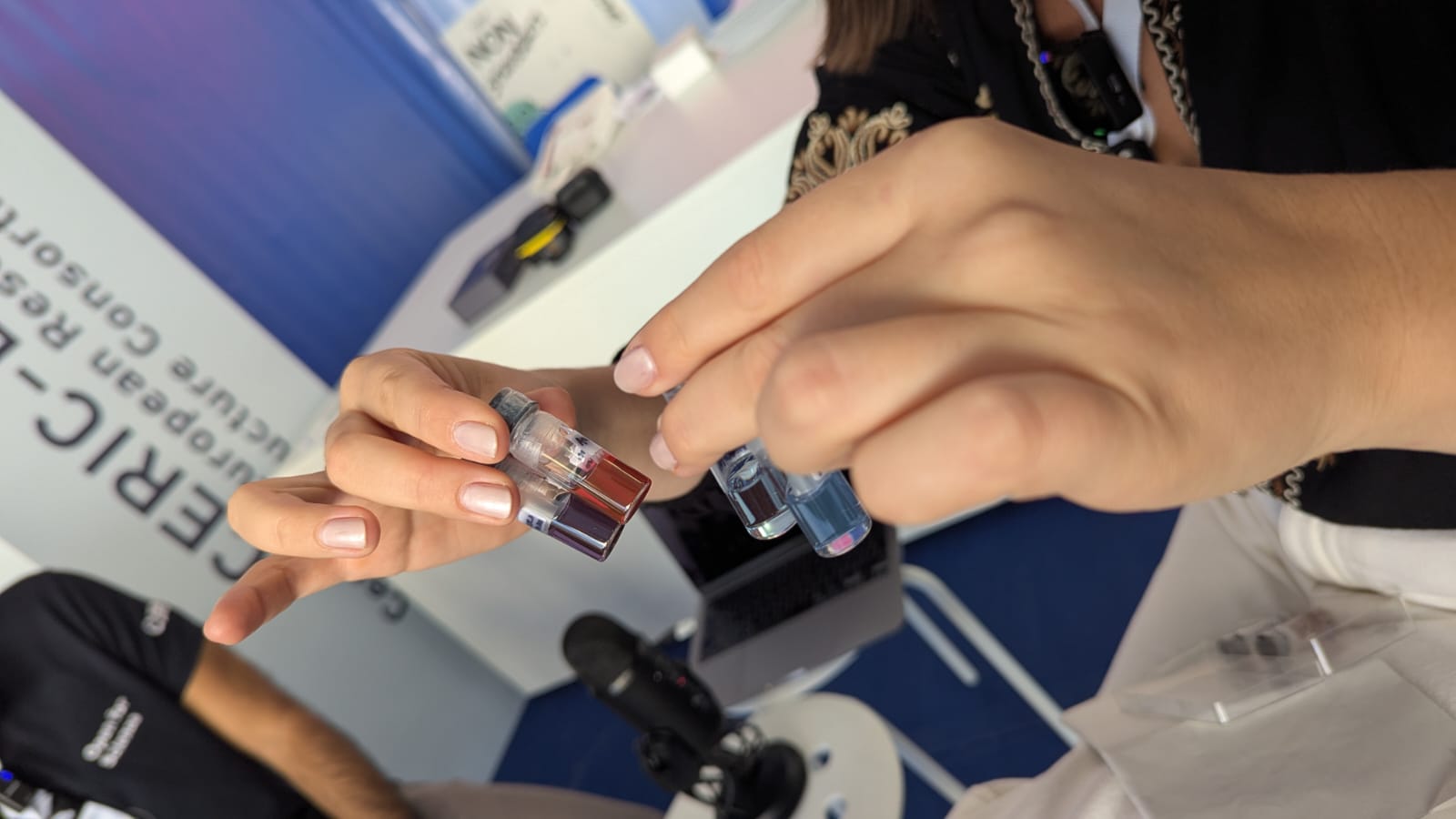
Rather than focusing only on scientific results, the conversations explored the people behind them: their research interests, their professional journeys and their experiences of working in an international scientific environment.
The informal format helped bring research closer to the public, showing that behind sophisticated instruments and complex experiments are people with different backgrounds, experiences and career paths. Interviews will be uploaded soon to the CERIC YouTube channel: keep in touch!
Beyond the double helix: exploring new frontiers in nanomedicine
Later that evening, CERIC’s researchers brought the audience into a very different area of cutting-edge science during the conference BEYOND the DOUBLE HELIX: DNA and NANOMEDICINE.
Two CERIC researchers, Elisa De Piante e Silvia Rotondi, presented the international projects in which they are involved, focusing on the fascinating world of non-canonical DNA structures – alternative forms of DNA that go beyond the familiar double helix and are attracting growing interest for their potential applications in biomedicine.
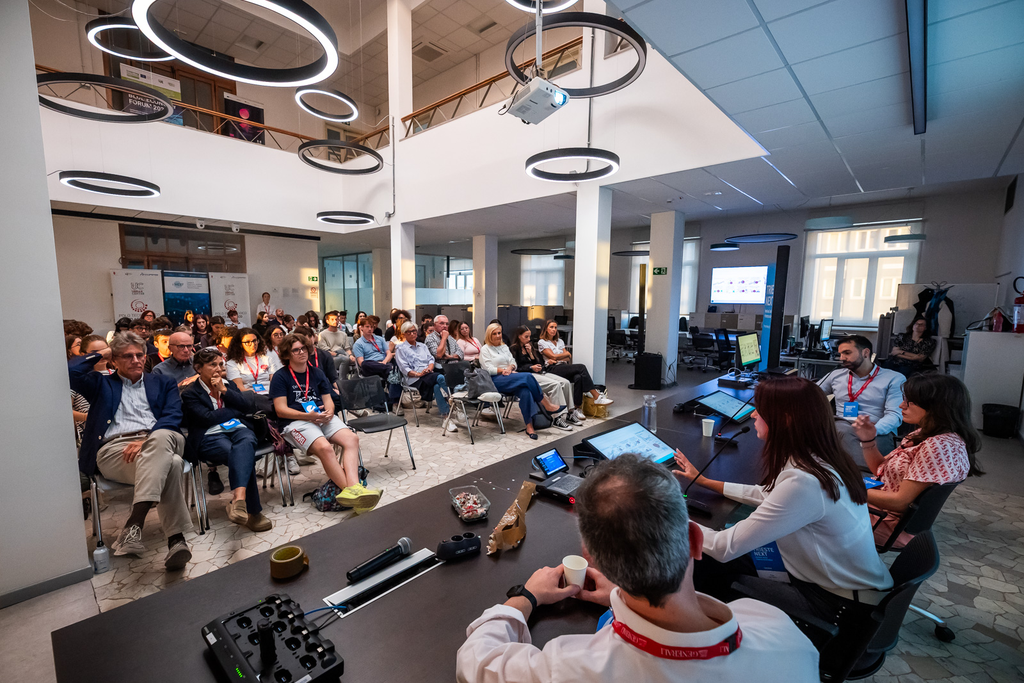
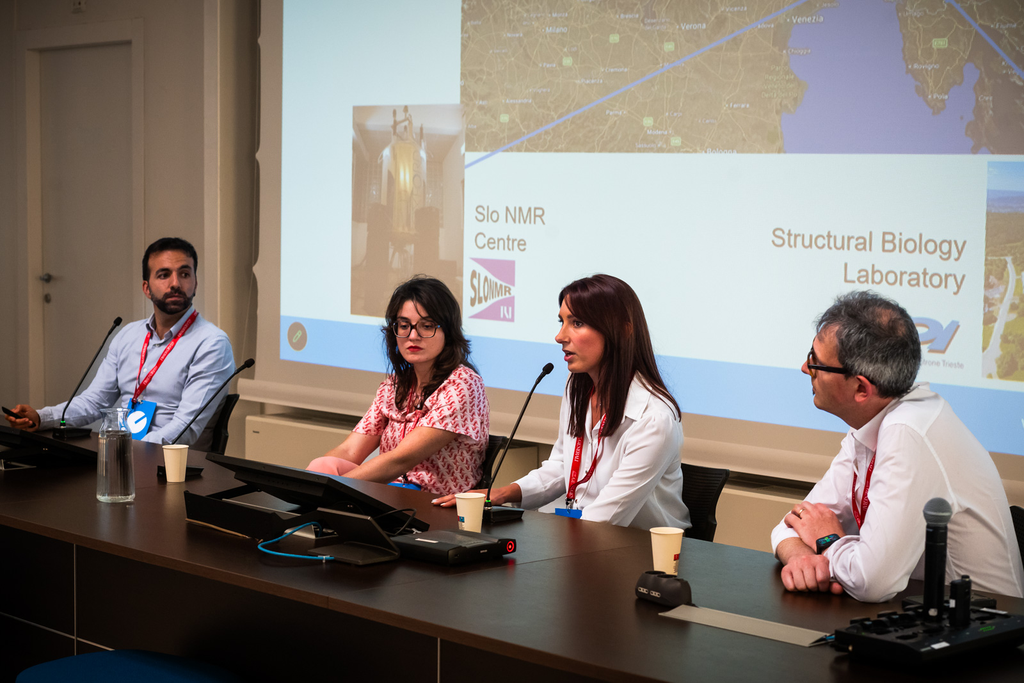
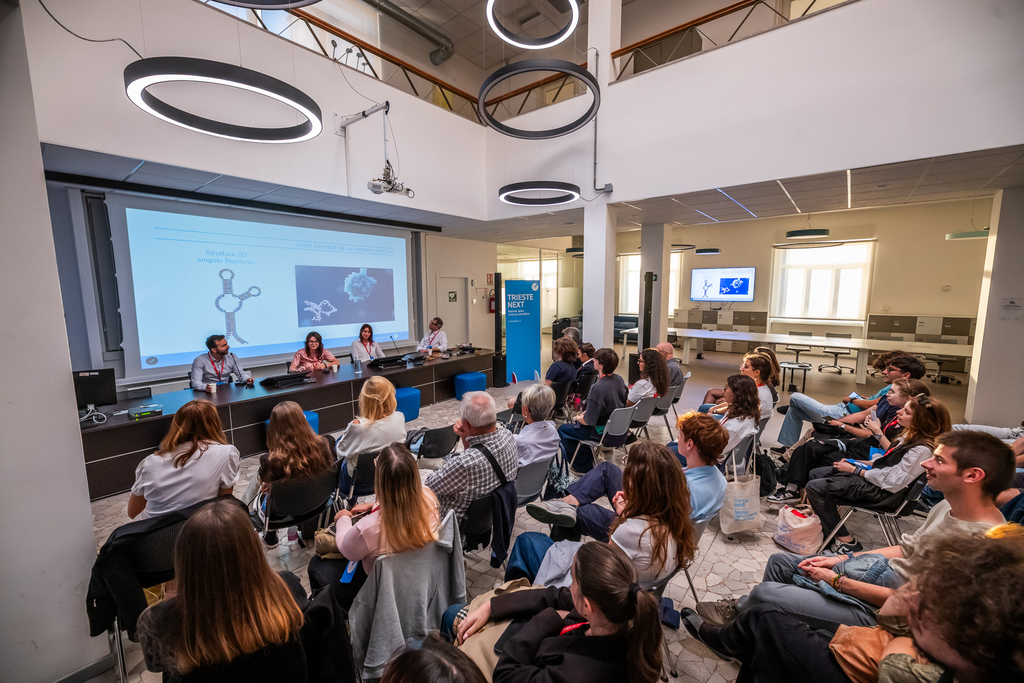
Copyright Elettra Sincrotrone Trieste
The projects discussed during the event, which also featured the participation of the DNA and biotechnology expert Matteo Castronovo, illustrate how advanced scientific investigation can connect fundamental research with real-world challenges: one explores the development of platforms capable of detecting pathogenic viruses, including adenoviruses and coronaviruses, in crowded environments. The other investigates how some non-canonical DNA structures interact with key genes encoding with several proteins, in both physiological and pathological situations.
Stepping into the shoes of a researcher
CERIC also invited visitors to discover research from a rather different perspective: by playing a game. At the AREA Science Park stand, NON STRESSARTI (DON’T STRESS) challenged participants to take on the role of a researcher trying to complete a scientific project while navigating the bureaucratic hurdles that can accompany research.
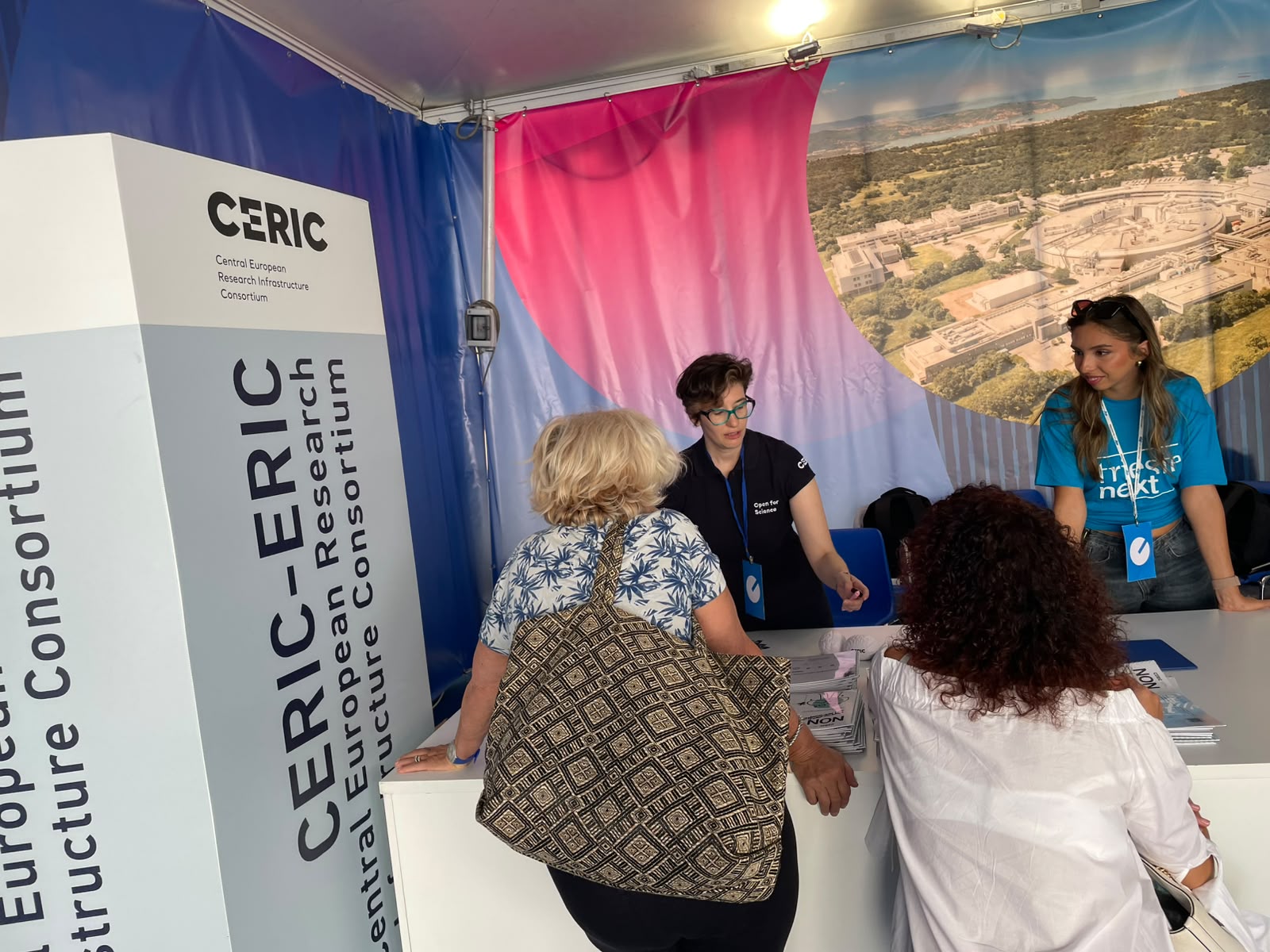
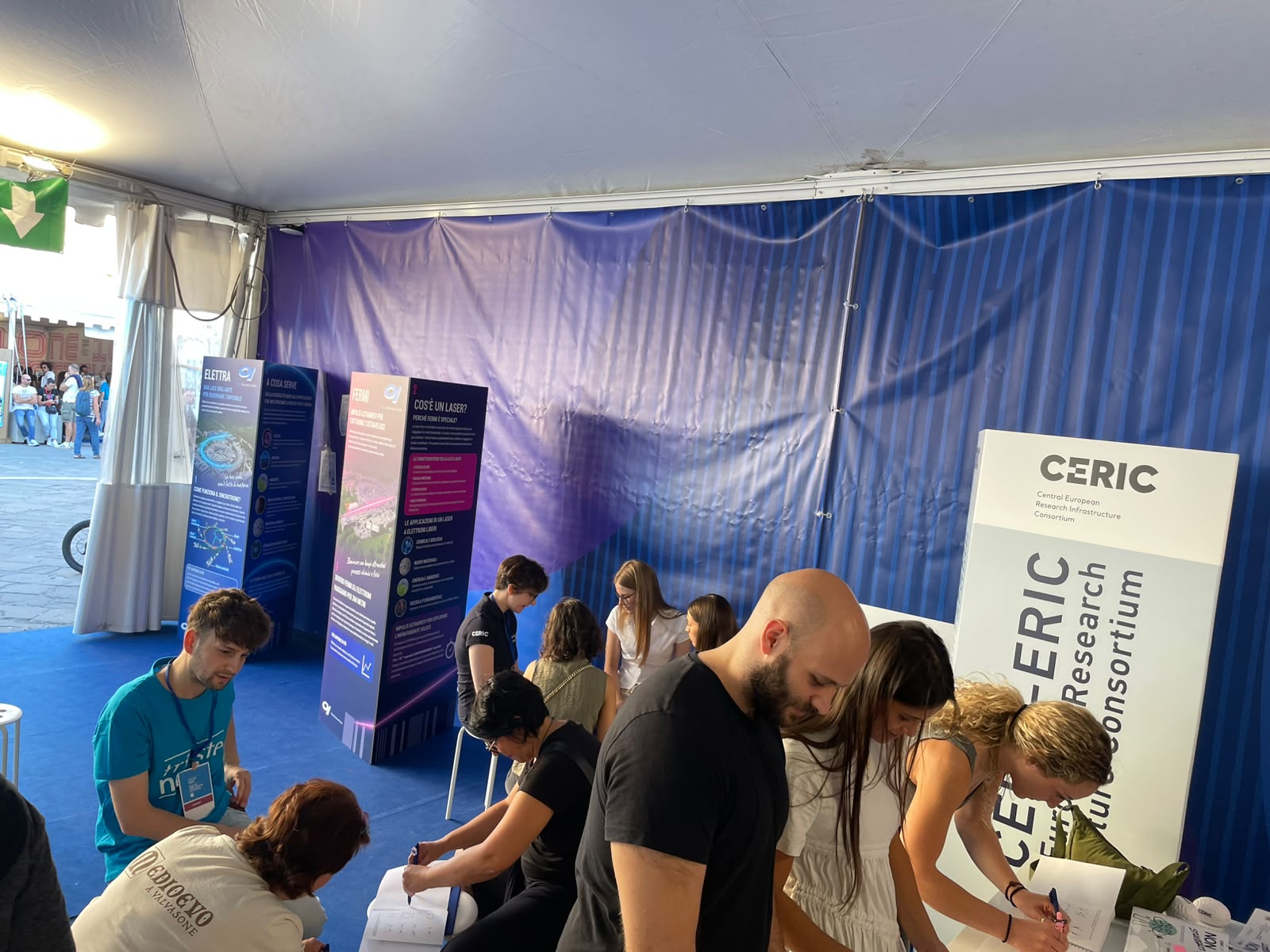
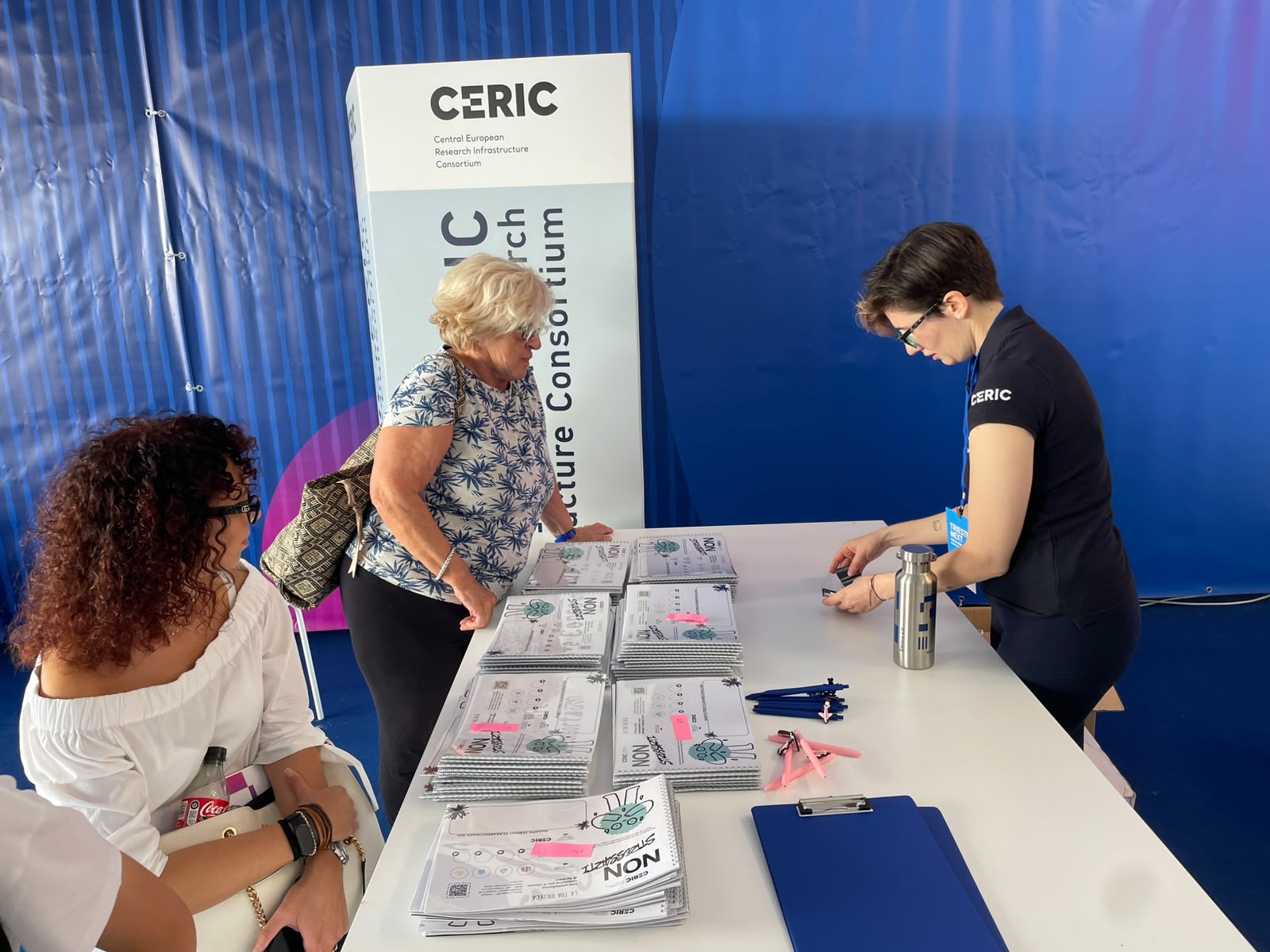
Through play and interaction, visitors could experience some of the less visible aspects of scientific work and discover how CERIC can help researchers access advanced facilities and carry out their projects. The activity provided an accessible entry point for people of all ages and backgrounds, turning an explanation of research infrastructure into a hands-on experience.
For CERIC, participating in Trieste Next was therefore much more than an opportunity to present its activities: it was a chance to meet people, listen, exchange ideas and make European research more accessible to a broad audience.